- Published on
Polymarket's Iran Bet Scandal: Insider Trading in Daylight
- Authors

- Name
- Sopha Kingtyred
- @kingtyred
When the Odds Are Already Fixed
There is a particular kind of audacity required to place a half-million-dollar bet on a military strike hours before it happens. Not courage. Not insight. Audacity. The kind that comes from knowing something no one else is supposed to know.
That is, apparently, what happened on Polymarket in early 2026. An anonymous trader operating under the handle "Magamyman" walked away with over $550,000 after correctly predicting the precise timing of U.S. and Israeli strikes on Iran — and the fate of Supreme Leader Ayatollah Ali Khamenei. The New York Times reported that the bets were placed just hours before the events occurred. The Iran-related betting markets on Polymarket reached a staggering $529 million in total volume. Bloomberg noted that brand-new wallets — accounts with no prior trading history — were among the biggest winners.
This was not a fluke. It was a pattern.

A Market Built on a Convenient Fiction
Prediction markets like Polymarket and Kalshi sell themselves on a seductive premise: that the collective wisdom of financially motivated participants produces more accurate forecasts than any single expert or institution. Polymarket CEO Shayne Coplan has called his platform "the most accurate thing we have as mankind right now." Kalshi's CEO, Tarek Mansour, has said the company is "replacing debate, subjectivity, and talk with markets, accuracy, and truth."
These are extraordinary claims. They are also, as The Atlantic argued in a pointed March 2026 analysis, largely fiction.
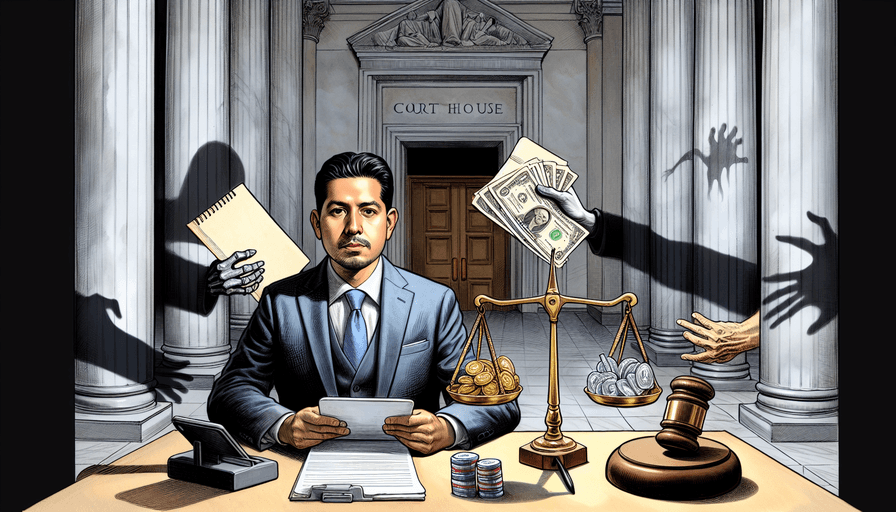
The Iran strikes exposed the core vulnerability: prediction markets do not aggregate wisdom. They aggregate information asymmetry. When a trader places a bet based on classified military intelligence, the market does not become more accurate — it becomes a mechanism for laundering insider knowledge into profit. The crowd is not wise. The crowd is being played.
The Atlantic characterized this dynamic as "the democratization of insider trading" — a phrase that deserves to be taken seriously, not celebrated. When platforms encourage anyone with an informational edge to monetize that edge, they are not building a better forecasting tool. They are building a more elegant way to cheat.
The meta-game makes this worse. As The Atlantic also noted, some traders are not even betting on outcomes — they are betting on what they think other traders think will happen. Secondary markets have emerged where users manipulate the primary market to profit on derivative bets. The signal, such as it was, has become noise dressed up in the clothes of data.
The Anatomy of a Scandal
The Magamyman trades did not emerge in a vacuum. They are the most dramatic entry in a growing ledger of suspicious activity on prediction markets.
In January 2026, an anonymous Polymarket user bet more than $30,000 on Venezuelan President Nicolás Maduro being ousted — just hours before his capture by U.S. military forces. That bet paid out $400,000. King & Spalding's legal analysis drew an explicit comparison to pre-New Deal securities markets, when corporate insiders routinely used nonpublic information for personal gain before such conduct was made illegal. History, it seems, does not always move in one direction.
Israeli authorities charged two individuals on suspicion of using classified information to bet on military operations on Polymarket. Middle East Eye reported that Israeli police opened an investigation into a Polymarket user who had correctly predicted the Iran strikes with suspicious precision.
Then there was the journalist. A reporter from The Times of Israel publicly stated that Polymarket gamblers were threatening him with death — demanding he rewrite a story about Iran missiles to move bet outcomes in their favor. The Wall Street Journal confirmed the account. This is not a regulatory footnote. This is a journalist receiving death threats because gamblers needed the news to say something different. The prediction market had become a machine for generating pressure on the very information ecosystem it claimed to be forecasting.
The Regulatory Scramble
Washington noticed. It could hardly avoid doing so.
On February 25, 2026, the CFTC's Enforcement Division issued an advisory asserting full authority to police illegal trading practices on designated contract markets (DCMs) like Kalshi and Polymarket. The advisory specifically highlighted potential violations of CEA § 6(c)(1) and Rule 180.1 — the CFTC's analog to the SEC's Rule 10b-5 — regarding manipulative schemes and the misappropriation of confidential information. King & Spalding noted that the CFTC took the unusual step of publicly characterizing cases of internal platform discipline as potentially illegal, putting traders on notice.
On March 12, 2026 — just days ago — CFTC Chair Mike Selig went further, unveiling new operational guidance and initiating a comprehensive rulemaking procedure. He published a staff advisory categorizing event contracts as a distinct financial asset category and filed an Advanced Notice of Proposed Rulemaking, opening a 45-day public comment period. Blockonomi reported that applications for designated contract market registration have increased by more than 100 percent over the prior year, driven largely by prediction market entrants.
Representative Ritchie Torres introduced legislation to ban federal workers from using prediction markets. His office's statement was unambiguous about the constitutional stakes, noting that Congress — not anonymous bettors — holds the power to declare war. Senators have described the situation as "insider trading in broad daylight." CBS News reported those remarks in February, before the Iran scandal had even fully unfolded.
The jurisdictional landscape is a mess. Several states have initiated legal proceedings against prediction market operators, arguing these platforms fall under state gambling statutes. The CFTC insists it has exclusive federal oversight. An Ohio district court recently rejected Kalshi's motion for preliminary relief against Ohio gaming regulators. CME Group CEO Terry Duffy suggested the contradictions may ultimately require Supreme Court resolution. SEC Chair Paul Atkins has indicated the SEC may have concurrent jurisdiction with the CFTC in certain cases. Two regulators, one market, zero clarity. 1
The Platforms' Defense, and Its Limits
Kalshi and Polymarket have both condemned insider trading — in their terms of service, if not always in practice. Kalshi spokesperson Jack Such told The Atlantic that the platform "bans insider trading not only because it's unfair, but also because it erodes trust," and that "war markets put Americans at risk and have absolutely no place in prediction markets." Kalshi does not allow bets on wars or assassinations.
Polymarket, which technically operates outside the United States, has been less circumspect. It has hosted markets on civil wars, assassinations, and, as The Atlantic documented, whether Jesus Christ will return before 2027. The Iran strike markets lived on Polymarket. The $550,000 payout to Magamyman came from Polymarket.
The platforms' internal enforcement has amounted to occasional suspensions and financial penalties. Within the betting community, informal "watchdog" accounts have emerged to flag suspicious trades — partly to warn others, partly to enable piggybacking on whoever seems to have the best information. This is not a compliance regime. It is a parasitic information market nested inside a prediction market.
Weekly notional volumes on these platforms have reached $6 billion as of January 2026. That is not a niche product. That is a systemically significant financial instrument with the regulatory framework of a startup and the ethical guardrails of a casino. 2
What Comes Next
The regulatory machinery is moving, but it is moving slowly, and the platforms are moving fast. The CFTC's rulemaking process will take months. Legislation moves even slower. In the meantime, the next Magamyman is presumably already placing bets.
The deeper problem is not just enforcement — it is architecture. Prediction markets are structurally designed to reward informational advantage. The question of whether that advantage comes from careful analysis or classified military briefings is, from the market's perspective, irrelevant. The price moves either way. The profit accrues either way.
The Iran strike scandal did not reveal a flaw in prediction markets. It revealed the logical endpoint of what prediction markets are. When you build a system that financially rewards anyone who knows something others don't, you should not be surprised when people with access to state secrets start showing up at the table.
A senator called it insider trading in broad daylight. That is accurate. What it also is, more precisely, is a system that was always going to produce this outcome — and that was celebrated, funded, and scaled anyway, until the trades started touching military operations and journalists started receiving death threats.
The crowds were never wise. They were just, for a while, uninformed in roughly equal measure. That equilibrium is gone. What replaces it will be decided, one way or another, in the coming months — in courtrooms, in congressional hearings, and on the ledgers of platforms that built their business model on the premise that information wants to be free, right up until it wants to be worth $550,000. 2