- Published on
TikTok's American Dream Is Already a Nightmare
- Authors

- Name
- Mike Rotchberns
- @MRotchberns
The Honeymoon Ended Before It Started
Congratulations, America. You fought for years to wrest TikTok from the clutches of ByteDance, waged legal battles all the way to the Supreme Court, and strong-armed a sale to a shining coalition of U.S. investors. The app is yours now. Oracle is at the wheel. And in the span of roughly six weeks, the whole thing has already fallen apart twice.
Welcome to the new TikTok. Same scroll. Fewer excuses.
A Rocky Arrival
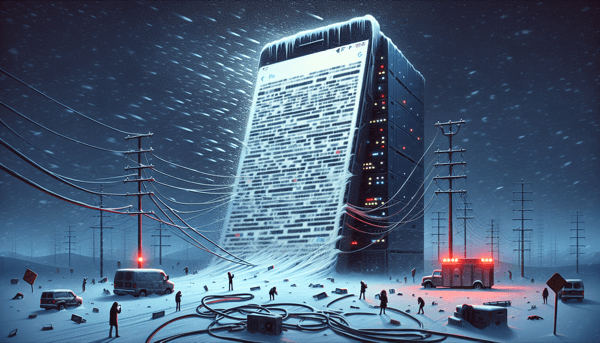
On January 22, 2026, TikTok officially transferred its U.S. operations to a joint venture that includes Oracle, Silver Lake, and MGX — a move years in the making. The ink was barely dry when things started going sideways. Within days, Winter Storm Fern knocked out power at an Oracle data center, triggering what TikTok USDS Joint Venture LLC would eventually describe as a "cascading systems failure."
The fallout was extensive. Creators found themselves unable to upload videos. Those who could upload watched their view counts flatline at zero despite having hundreds of thousands of followers. Earnings dashboards went dark. The For You Page — the algorithmic heartbeat of the entire platform — began surfacing stale, irrelevant content instead of fresh posts. CapCut, TikTok's companion video editing tool, went down alongside it. DownDetector lit up with thousands of reports, and the disruption stretched across multiple days.
None of this is particularly surprising when you understand what happened: a physical storm took down a data center, and Oracle apparently hadn't built in the kind of redundant failover infrastructure that every major platform at this scale is expected to have. As The Guardian noted, it is uncommon for a storm to wound a platform of TikTok's magnitude this severely, because such services are supposed to have backups to their backups. Supposed to.
Silence, Then Spin
What made the January outage worse than the technical failure itself was the response — or rather, the lack of one. TikTok went silent for days while its users descended into speculation. The timing couldn't have been more combustible.
Simultaneously, federal immigration officers killed a 37-year-old U.S. citizen named Alex Pretti during a Minneapolis protest. Creators trying to post footage found they couldn't upload, or that their videos received zero views. The conclusion many drew was obvious, if ultimately unsubstantiated: the new American owners — among them Larry Ellison, a known MAGA donor — were suppressing anti-ICE content.
High-profile voices piled on. California Senator Scott Weiner, Billie Eilish, and comedian Meg Stalter publicly accused TikTok of censorship. Governor Gavin Newsom announced an investigation. The New York Times, CNN, and the Washington Post all ran the story. 1
TikTok finally issued a statement on January 26, blaming the outage on the power failure and assuring users that "actual data and engagement are safe." Oracle followed with its own confirmation of a "weather-related power outage." The delayed communication did little to restore confidence. An unknown number of users announced they were leaving, and a competitor app called Upscrolled — which promises less censorship — shot to the top of the U.S. Apple App Store. As of late January, TikTok had slipped to No. 16.
History, Repeating Itself Immediately
If the January disaster was a rough patch, the events of today — March 3, 2026 — are something else entirely: a pattern.
This afternoon, TikTok went down again. The TikTok USDS Joint Venture posted on X: "An issue with an Oracle data center is impacting some parts of the TikTok U.S. user experience. Creators may temporarily experience lags in posting content while Oracle works to resolve the issue." Oracle confirmed that cloud customers had been experiencing connection timeouts, errors, and increased latency in its Ashburn facility.
DownDetector showed thousands of reports flooding in from New York, Chicago, Los Angeles, San Diego, Houston, and beyond. 2 This time, at least, TikTok communicated promptly. Small mercies.
But here's the thing: two Oracle-related outages in under six weeks is not a weather story. It's an infrastructure story. It's a vendor accountability story. And frankly, it's a story about what happens when a platform of over a billion users is handed off to a new ownership group that apparently hasn't stress-tested its own supply chain.
The Bigger Problem Nobody Wants to Say Out Loud
Oracle is a business software giant. It is not, historically, a consumer-facing platform company. Managing the backend of enterprise databases is a different animal from keeping a real-time video platform running smoothly for hundreds of millions of users who are actively uploading and consuming content every second of the day.
The January outage exposed the absence of adequate redundancy. The March outage — caused again by an Oracle data center, this time in Ashburn — suggests the lesson wasn't fully learned. The technical failures have been well-documented: zero-view glitches, broken FYP algorithms, upload failures, missing earnings, cascading bugs that took days to untangle. These are not minor inconveniences. For creators whose livelihoods depend on the platform, every hour of downtime is real money lost.
Caixin Global framed the January outage as a test of TikTok's resilience under its new American-owned structure. By that measure, the platform has now failed the test twice.
Conclusion
There's a certain grim irony in all of this. The U.S. government spent years arguing that TikTok under Chinese ownership was a national security threat, a platform too dangerous and unreliable to be trusted in American hands. So it forced a sale to American hands. And those American hands have now fumbled the ball twice before the first quarter is even over.
The censorship allegations from January remain unproven. The technical failures are not. User trust has eroded. Competitors are capitalizing. And TikTok, newly minted as an American institution, is learning the hard way that ownership changes don't automatically come with operational competence.
This was supposed to be the beginning of something. Right now, it looks more like the beginning of the end — just with a different flag on the way down. 1